
Sodium-ion vs. Lithium: The Future of Winter Electric Motorcycle Fleets
For commercial delivery companies, distributors, and electric motorcycle fleet operators, winter is one of the hardest seasons to plan around. Low temperatures can reduce available range, slow charging behavior, and put pressure on rider schedules during peak delivery hours.
Many buyers already understand the basic difference between lead-acid and lithium batteries. The next question is whether sodium-ion battery technology can become a practical option for cold-weather electric motorcycle fleets. The answer depends on chemistry, pack design, real route testing, and the way the vehicle is used.
This guide explains why sodium-ion batteries are attracting attention for winter delivery operations, how they compare with lithium options, and what B2B buyers should verify before placing container orders or building a fleet program.
Fleet planning note: Battery performance depends on cell chemistry, pack design, BMS settings, charger match, route profile, payload, temperature, and local service practice. Buyers should validate sodium-ion and lithium options with sample testing and local operating data before scaling fleet orders.
The Hidden Science Behind Cold Weather Battery Drain
Battery performance changes in winter because low temperature slows electrochemical activity inside the cell. In many lithium-ion and lead-acid packs, internal resistance rises as temperatures fall. The battery management system may limit output to protect the pack, which can reduce acceleration, usable range, and charging efficiency.
For a single private rider, this may only be an inconvenience. For a delivery fleet, it becomes an operating problem. More charging stops, shorter routes, and unexpected range loss can affect rider productivity and customer service.
This is why cold-weather battery choice should be discussed at the fleet-planning stage, not after the vehicles arrive.
How Sodium-ion Chemistry Can Support Freezing Conditions
Sodium-ion batteries use sodium-based chemistry instead of lithium-based chemistry. One reason the technology is drawing attention is its potential stability across wider temperature conditions. In some applications, sodium-ion cells may retain more usable performance in cold environments than certain conventional battery options.
For electric motorcycle fleets, the practical value is not just laboratory chemistry. Buyers should ask how the battery pack, BMS, charger, wiring, controller, and motor work together under realistic delivery routes. The best comparison is a sample test under local winter conditions.
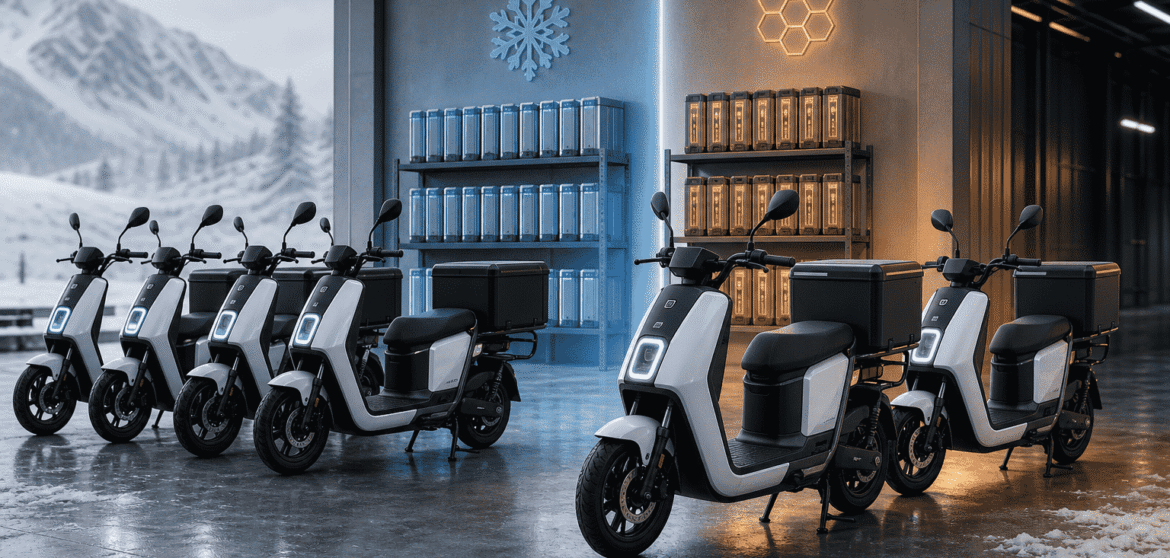
Sodium-ion may be especially interesting for distributors serving colder cities, mountain regions, or delivery fleets with outdoor parking and frequent short trips.
Thermal Safety and Operational Lifespan
Battery safety is another reason B2B buyers are watching sodium-ion technology. Compared with some high-energy lithium chemistries, sodium-ion cells are often discussed for improved thermal stability. However, responsible sourcing still requires pack-level testing, BMS protection, charger matching, and clear safety documentation.
For commercial electric motorcycle buyers, useful questions include: How is the battery pack protected from vibration? What BMS protections are included? What charging standard is used? What is the recommended storage temperature? What test reports or documentation can the supplier provide?
Cycle life should also be reviewed carefully. A longer-lasting battery can support lower replacement pressure, but actual life depends on charging habits, depth of discharge, operating temperature, and service management.
Lowering TCO for Electric Motorcycle Distributors and Fleets
Total Cost of Ownership is the real metric for fleet buyers. Battery price matters, but so do range stability, charging time, replacement planning, downtime, spare parts, warranty scope, and rider acceptance.
Sodium-ion batteries may offer supply-chain and cost-stability advantages because sodium resources are more widely available than lithium resources. For distributors, this can make the technology worth reviewing as part of a long-term electric motorcycle product strategy.
That does not mean every fleet should switch immediately. The right decision depends on target market, climate, price positioning, performance requirements, and after-sales capability.
What Buyers Should Verify Before Scaling Sodium-ion Orders
Before placing a large order, importers and fleet buyers should review the full system, not only the battery label. Confirm cell chemistry, capacity, rated voltage, BMS protections, charger specifications, motor and controller matching, spare battery availability, and documentation support.
For CKD/SKD assembly partners, battery packing, labeling, storage, local assembly workflow, and technician training should also be included in the plan. Where regulations apply, approval and documentation should be handled through importer-led approval and local verification required.
Talk to SunRise EV About Sodium-ion Electric Motorcycle Options
SunRise EV can support overseas distributors, fleet buyers, and local assembly partners with electric motorcycle configuration discussion, battery option review, sample planning, documentation support, and CKD/SKD planning where applicable.
If your market faces winter range complaints, high delivery mileage, or strict fleet uptime requirements, sodium-ion battery options may be worth evaluating. Share your target country, winter temperature range, route profile, payload, and expected order volume with SunRise EV, and our team can help review a practical electric motorcycle configuration for your business.