

Battery Swapping: Reducing Fleet Charging Downtime
In last-mile delivery and express logistics, operational speed dictates profitability. For fleet operators managing hundreds of couriers across sprawling metropolitan zones, keeping vehicles active on the road is the primary goal. While electric motorcycles offer undeniable financial advantages over legacy fuel-based alternatives regarding fuel savings and reduced engine maintenance, traditional plug-in charging creates a massive operational bottleneck: charging downtime. The definitive solution to this commercial hurdle is battery swapping technology, a system that transforms fleet logistics into a continuous, 24/7 revenue-generating engine.
B2B buyer note: Performance, ROI, safety, compliance, and local assembly results depend on model configuration, operating conditions, local verification required, importer-led approval, and after-sales execution. Validate claims with samples, documentation support, and real market data before scaling orders.
The Idle Asset Problem: The True Cost of Hourly Charging
Consider the peak hours of a busy weekend delivery rush. A courier has an influx of high-paying customer orders waiting on their mobile application, but their electric motorcycle battery is depleted. If the driver is forced to plug the motorcycle into a standard wall outlet or a shared charging point, the vehicle must sit completely idle for several hours to achieve a full charge. This prolonged waiting period dramatically restricts the rider’s daily delivery capacity, limits your fleet’s overall volume, and represents an idle business asset. To achieve true commercial efficiency, refueling an electric motorcycle must match or beat the speed of filling a traditional gas tank.
How the 30-Second Swapping Process Works
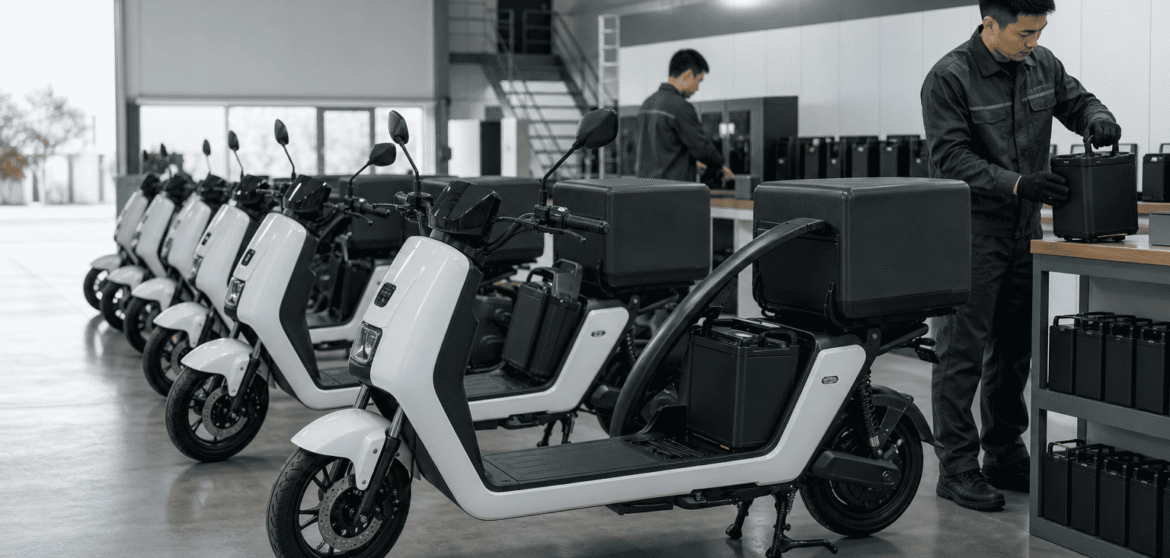
Battery swapping technology completely replaces hours of stationary charging with a rapid, mechanical process that takes under a minute. When a delivery driver’s battery energy drops, they navigate directly to a localized smart battery swapping cabinet station distributed throughout the city infrastructure. The rider scans a secure identification code, a automated locker door opens, and they slide their depleted battery cell inside. The intelligent cabinet automatically validates the battery health and instantly opens a separate door containing a 100% fully charged, cooled battery pack. Within thirty seconds, the rider plugs the new cell into their vehicle and returns to the road, plan arounding charging wait times completely.
Hardware Standardization for Widespread Infrastructure Integration
For an international distributor or fleet operator looking to deploy a highly successful battery swapping ecosystem, cell and compartment hardware standardization is vital. If vehicle dimensions are non-standard, the batteries will not fit into localized public cabinet networks. Advanced commercial electric motorcycles are engineered with universally compatible battery compartments, standardized voltage outputs, and industrial quick-connect heavy-duty plugs. This strict hardware consistency allows your imported fleet to integrate effortlessly into pre-existing municipal swapping grids or enables your company to smoothly launch a highly efficient, proprietary charging network.
Maximizing Daily Revenue Capabilities for the Delivery Economy
Transitioning your commercial logistics business model to a battery-swapping electric motorcycle platform unlocks unprecedented operational efficiency. By separating the vehicle from the stationary charging process, your active fleet achieves near-continuous出勤率 (operational uptime). Drivers can handle double the delivery volume per shift, vehicle turnaround times are minimized, and your business captures the maximum possible return on investment from your electric motorcycle infrastructure. 📝

