
2026 LatAm Electric Motorcycle Trends: The Shift to Local CKD Assembly
Latin America is becoming one of the most important regions for electric motorcycle distributors, fleet buyers, and local assembly partners to watch. Urban delivery demand, fuel-cost pressure, dense city traffic, and interest in cleaner mobility are all pushing buyers to review electric two-wheelers more seriously.
For investors and local distributors, the opportunity is not only selling individual vehicles. The bigger question is how to build a durable electric motorcycle business: the right model mix, the right battery and motor configuration, a reliable after-sales system, and a supply structure that can support CKD/SKD planning where applicable.
This article reviews the major 2026 planning themes shaping the Latin America electric motorcycle market and how SunRise EV can support B2B buyers with product configuration, CKD/SKD planning, documentation support, and export packaging.
Market planning note: Latin America is not one single market. Import rules, incentives, road-use requirements, customs treatment, and local assembly policy vary by country. CKD/SKD planning should be reviewed through customs broker verification, importer-led approval, and local verification required where applicable.
Trend 1: Delivery Fleets Are Driving Practical EV Demand
Quick-commerce, food delivery, parcel logistics, and urban courier services continue to influence electric motorcycle demand across major Latin America cities. For these buyers, the decision is usually economic as much as environmental.
Fleet operators care about Total Cost of Ownership, uptime, payload, charging routines, spare parts, and serviceability. A delivery-focused electric motorcycle must be more than a lightweight consumer scooter. It needs a battery system, frame, motor, controller, and cargo structure that can handle daily commercial use.
This is why distributors entering the market should think beyond catalog models. They need to define whether their buyer is a commuter, a delivery rider, a rental operator, a municipal user, or a fleet manager, then choose specifications accordingly.
Trend 2: CKD/SKD Planning Is Becoming a Serious Market Strategy
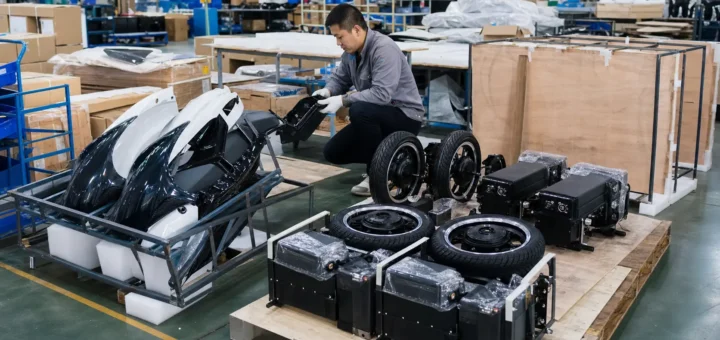
Many Latin America importers are reviewing SKD or CKD models because local assembly can support market entry, dealer development, service capability, and container planning. For some buyers, assembly-based import planning may also affect customs classification or documentation needs, but every destination requires customs broker verification and local verification required.
CKD is not just a shipping format. It is a business system. A successful local assembly plan needs organized component grouping, clear packing lists, SOP documentation, trained workers, inspection steps, spare parts planning, and importer-led approval where applicable.
For investors, the appeal is strategic: instead of only importing finished units, they can build local capability around electric motorcycle assembly, service, and brand development.
Trend 3: High-Torque, Terrain-Ready Models Matter
Latin America is not a flat, uniform riding environment. Many cities include hills, uneven roads, speed bumps, heavy rain seasons, dense traffic, and mixed delivery routes. Low-powered urban scooters may work for short commutes, but commercial and distributor markets often need stronger specifications.
Buyers should review high-torque motor options, battery capacity, controller matching, braking performance, tire type, suspension setup, frame strength, and cargo rack design. For delivery use, the vehicle must remain stable with payload and repeated stop-and-go riding.
Motor ratings such as 1200W+ may be relevant for certain heavy-duty use cases, but the correct specification depends on payload, route profile, speed expectations, local road rules, and buyer positioning.
Trend 4: Incentives and Infrastructure Need Local Verification
Some Latin America markets are exploring policies that support cleaner transport, including public-sector pilots, fleet electrification programs, charging discussions, or tax-related measures. These can influence buyer interest, but they should not be treated as guaranteed benefits.
Before building a sales forecast around incentives, distributors should confirm the current rules with local professionals. Requirements can vary by city, vehicle category, registration pathway, battery type, and importer status.
A cautious market plan separates what is confirmed from what is possible. That approach protects both the importer and the end customer.
What This Means for Latin America Distributors
The strongest opportunity is likely to go to buyers who combine product knowledge with supply-chain planning. A successful electric motorcycle distributor needs more than a low purchase price. They need model positioning, local service capability, spare parts planning, documentation support, and a clear decision on CBU, SKD, or CKD import structure.
For fleet-facing businesses, the sales conversation should focus on uptime, TCO, battery management, cargo reliability, and after-sales responsiveness. For retail distributors, design, financing, service parts, and brand credibility may matter more.
Both groups benefit from working with a manufacturer that understands electric motorcycle engineering and export execution, not only trading.
Seize the LATAM Market Opportunity With SunRise EV
SunRise EV supports Latin America importers, distributors, investors, fleet buyers, and local assembly partners with electric motorcycle model selection, heavy-duty configuration discussion, CKD/SKD planning, Spanish documentation support where applicable, and export packaging preparation.
Whether your goal is to launch a private-label electric motorcycle brand, support delivery fleets, or evaluate local CKD assembly, the next step is to define your target country, rider use case, expected order volume, battery and motor requirements, and compliance pathway.
Talk with SunRise EV about your Latin America market plan. We can help review practical electric motorcycle configurations and CKD/SKD supply options while your local team confirms import, compliance, and approval requirements.