
Frame Durability: Why Exclusive Electric Motorcycle Molds Outlast Generic Models
When international B2B buyers import electric motorcycles for commercial delivery networks or intensive commuter rental markets, the exterior aesthetics catch the buyer’s eye, but the internal chassis engineering determines the actual commercial lifespan of the investment. In low-end, budget-driven manufacturing networks, hidden structural flaws within the chassis frequently lead to a catastrophic field issue: frame cracking under load. To safeguard your business reputation, reduce high warranty claims, and ensure driver safety, it is essential to analyze the mechanical differences between shared public components and specialized exclusive mold chassis engineering.
B2B buyer note: Performance, ROI, safety, compliance, and local assembly results depend on model configuration, operating conditions, local verification required, importer-led approval, and after-sales execution. Validate claims with samples, documentation support, and real market data before scaling orders.
The Structural Structural Flaws of Public-Mold Vehicle Frames
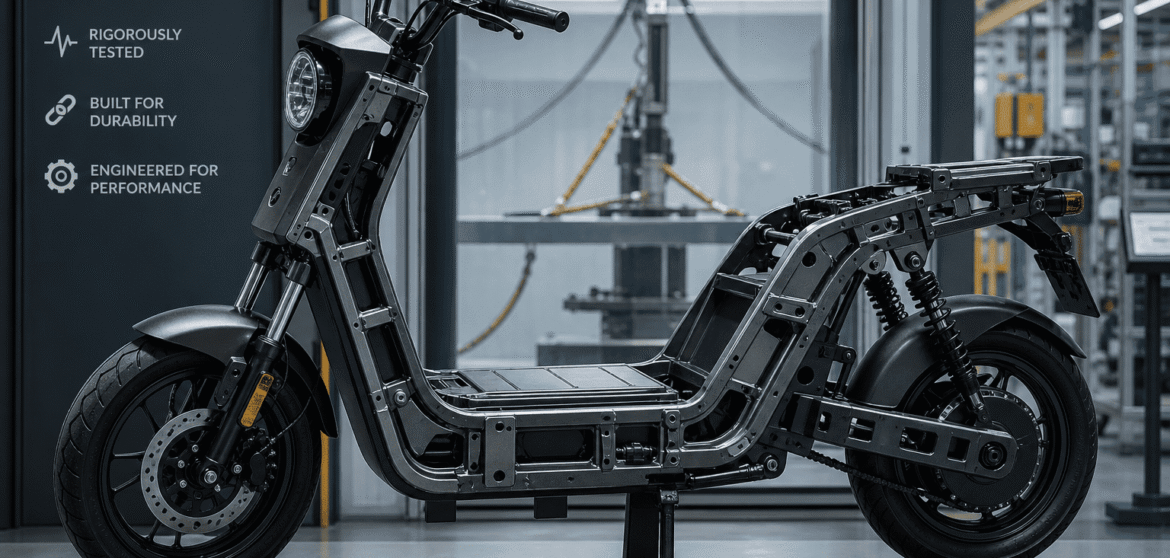
Public-mold vehicle designs are open-source configurations shared among hundreds of small, low-tier assembly workshops. To remain highly competitive on low upfront prices, these manufacturers minimize material costs by utilizing thin-walled, low-grade steel tubing. While a fragile chassis structure may hold up during light, casual urban riding, it quickly fails when put to hard daily work. When a commercial vehicle continuously impacts city potholes and unpaved roads while heavily loaded, immense physical stress concentrates directly on the weak weld points of the rear frame. Over time, these structural nodes suffer from metal fatigue, leading to sudden, dangerous frame snapping or permanent chassis bending that completely destroys the vehicle asset.
Advanced Stress Testing for Heavy-Duty Chassis Architecture
Developing an exclusive mold allows engineering teams to step completely away from fragile generic components and build a chassis based on finite element analysis (FEA). Specialized engineering dictates that critical stress-bearing areas are heavily reinforced with high-tensile carbon steel alloys. Before a private mold enters mass manufacturing, prototype frames must be subjected to brutal destructive testing on computer-controlled hydraulic dyno rigs. These frames endure millions of cycles of high-frequency vibration and multi-axis weight simulations under extreme load capacities. This rigorous industrial validation supports that the structural metal skeleton can comfortably survive years of heavy commercial abuse without micro-cracking.
The Crucial Alignment Between Steel and Outer Fairings
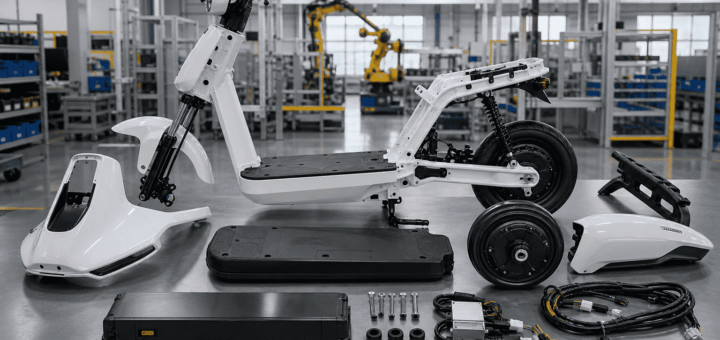
The structural engineering of the frame also directly impacts the longevity of the vehicle’s exterior components. Cheap public molds suffer from loose, inconsistent chassis dimensional tolerances, forcing assembly workers to physically bend and strain the plastic outer fairings during assembly to make them fit together. This creates constant, severe internal tension across the body panels. After just a few months of real-world road vibrations, the plastic clips loosen, the body parts rattle uncontrollably, and panels crack around the mounting screws. Exclusive mold engineering supports perfect, millimeter-precise alignment between the steel chassis and the outer fairings, reducing internal stress and maintaining a premium, rattle-free build quality.
Protecting Business Equity Through Structural Integrity
Distributing vehicles with structurally weak frames is the fastest way to destroy wholesale buyer trust, incur massive financial losses through warranty parts shipments, and face potential legal liabilities due to rider accidents. By sourcing vehicles built exclusively on dedicated, stress-tested modular molds, international importers support uncompromised durability. This structural insurance protects your long-term market valuation and allows your business to scale with confidence.