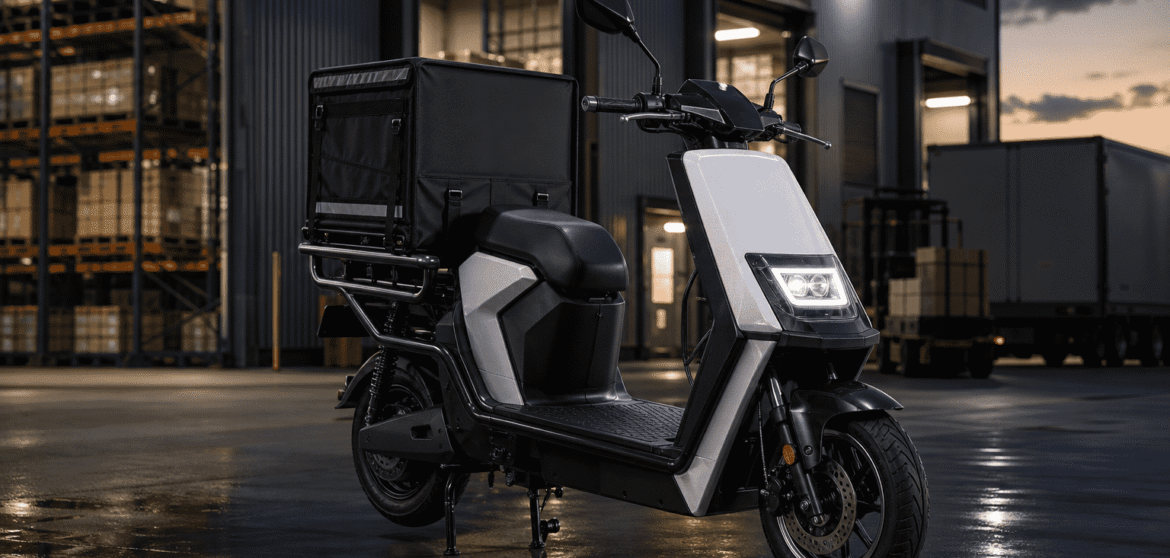
Cargo Logistics: Why Subframe Engineering Matters for Delivery Electric Motorcycles
The global e-commerce and fast-delivery economies are expanding sharply, generating a massive commercial market for specialized fleet logistics vehicles. However, fleet procurement managers quickly learn that standard commuter two-wheelers fail catastrophically when subjected to the harsh demands of professional courier operations. The number one mechanical point of failure for high-use delivery mopeds is the structural failure of the rear subframe. This guide analyzes why dedicated heavy-duty subframe engineering is important for safeguarding your last-mile delivery assets from expensive road breakdowns and frame warp.
B2B buyer note: Performance, ROI, safety, compliance, and local assembly results depend on model configuration, operating conditions, local verification required, importer-led approval, and after-sales execution. Validate claims with samples, documentation support, and real market data before scaling orders.
The Leverage Crisis: How Heavy Rear Loads Stress Regular Frames
Commercial couriers do not ride light; they carry massive weight daily. When you combine a fully packed, heavy insulation delivery box, mounting racks, and occasional auxiliary battery packs, the rear portion of the vehicle routinely supports significant dead weight. Standard passenger scooters are structurally engineered to support weight centered directly over the main axle between the wheels, not hanging completely off the rear termination point of the chassis. This rear-heavy loading configuration creates a powerful leverage effect, applying immense, continuous upward and downward twisting forces onto the rear frame welds every time the vehicle traverses an urban speed bump or uneven pavement.
Continuous Steel Architecture vs. Bolt-On Aftermarket Racks
To solve this structural vulnerability, specialized commercial electric motorcycles utilize continuous steel subframe architecture. Many low-end suppliers simply take a consumer scooter and bolt a cheap aftermarket metal rack onto the fragile rear plastic assembly. This layout concentrates all the weight onto a few weak bolt holes. True cargo-engineered chassis designs integrate the heavy-duty rear subframe directly into the main steel frame structure as a single, uninterrupted piece. By utilizing dual-tube reinforcement and welded steel gusset plates along the primary load-bearing lines, the chassis successfully distributes extreme rear cargo weight evenly across the entire wheelbase.
Eradicating High-Speed Wobbles for Enhanced Fleet Safety
An unreinforced, weak rear frame doesn’t just present a structural breaking risk—it creates a severe operational safety hazard for the driver. When a subframe flexes or bends under a heavy load, it fundamentally alters the vehicle’s tracking alignment, causing dangerous high-speed front-wheel wobbles and unstable cornering. Continuous subframe architecture maintains stronger structural control under maximum carrying capacity. This rigidity ensures that your commercial drivers enjoy predictable handling, precise steering control, and highly stable braking performance, even when weaving through tight, chaotic city traffic with bulky thermal cargo.
Minimizing Maintenance Downtime in Last-Mile Operations
In the low-margin, high-volume world of third-party logistics, vehicle downtime is a profit killer. Every day a delivery bike sits in a maintenance bay waiting for frame welding repairs, your company loses shipping capacity while fixed overhead costs accumulate. Sourcing vehicles featuring purpose-built, cargo-reinforced subframes can help reduce structural vehicle breakdowns from your operational worries entirely, driving up your fleet utilization rates and lowering long-term maintenance costs.