
Fleet Ergonomics: Maximizing Delivery Driver Safety and Comfort
When sourcing commercial electric motorcycles for wholesale distribution networks or corporate logistics fleets, it is highly common for procurement departments to focus exclusively on battery specifications, electrical range, and raw motor power. However, there is a separate, equally critical factor that directly influences your daily operational profitability and driver retention rates: vehicle ergonomics and rider comfort. Delivery couriers regularly spend eight to ten hours a day sitting on a motorcycle, navigating highly stressful urban traffic environments. Investing in rider-centric design is a vital business strategy for reducing liabilities and increasing productivity.
B2B buyer note: Performance, ROI, safety, compliance, and local assembly results depend on model configuration, operating conditions, local verification required, importer-led approval, and after-sales execution. Validate claims with samples, documentation support, and real market data before scaling orders.
Driver Fatigue: The Root Cause of Operational Accidents
Operating a commercial two-wheeler continuously for long shifts takes a heavy toll on the human body. Poorly designed vehicle ergonomics put intense, repetitive strain on the driver’s lower back, spine, wrists, and shoulder joints. As physical fatigue sets in over hours of riding, the courier’s mental alertness and physical reaction times drop significantly. In high-volume delivery networks, driver exhaustion is the primary hidden cause of costly traffic accidents. Accidents lead to broken vehicle assets, expensive insurance claims, driver downtime, and severe logistical disruptions. Therefore, driver comfort is directly linked to fleet risk management.
Engineering the Optimal Commercial Riding Triangle
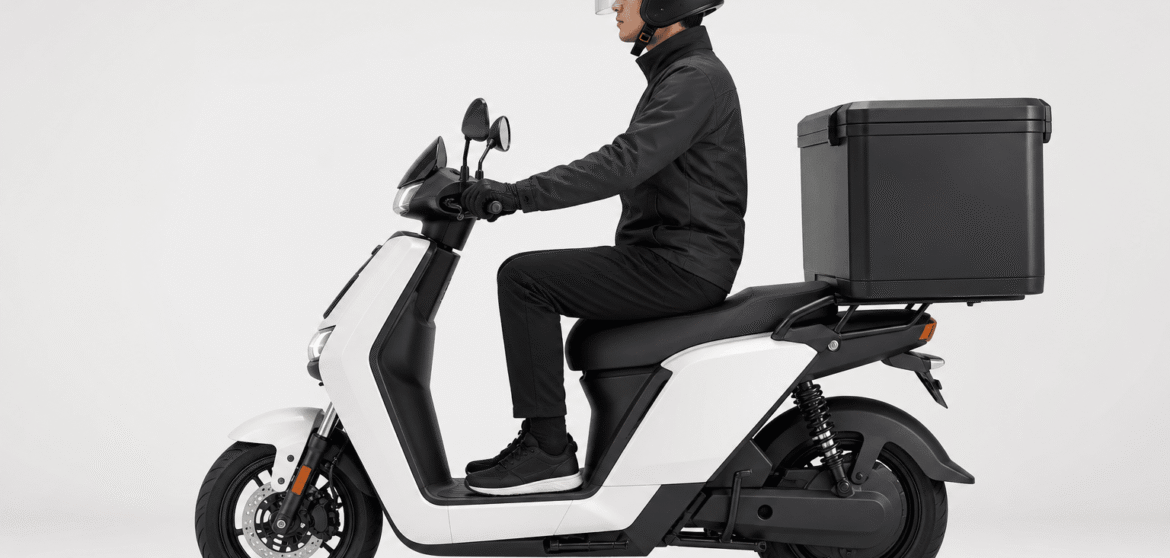
To minimize physical fatigue and keep drivers fully focused on the road, specialized commercial electric motorcycles utilize strict ergonomic engineering. Designers focus heavily on optimizing the “riding triangle”—the specific geometric distance and angles between the handlebars, the seat cushion, and the footpegs. By raising handlebar heights slightly and widening the foot platform, the vehicle forces the driver into a natural, healthy upright posture. This spinal alignment relieves strain on the lower back and neck, allowing couriers to remain alert and comfortable throughout long commercial shifts.
High-Density Double-Cushion Seating for High-Frequency Use
Standard consumer scooters typically feature thin, style-focused seat foam that collapses under continuous weight, causing riders to sit directly against the hard plastic seat base plate within an hour of riding. Commercial-grade electric motorcycles require widened, high-density double-cushion memory foam seating covered in heavy-duty, weather-resistant anti-slip material. This specialized cushioning material evenly distributes the driver’s weight, can reduce road surface shock transmissions, and prevents localized pressure soreness, ensuring that your workforce can perform efficiently without requesting early shift relief.
Active Safety: Integrated CBS and Hydraulic Disc Systems
Ergonomics must always be paired with active mechanical safety systems to protect loaded commercial vehicles. A delivery motorcycle carrying heavy cargo rearward possesses a significantly extended stopping distance, especially during unexpected rainstorms on slick city asphalt. Equipping fleets with dual hydraulic disc brakes paired with a Combined Braking System (CBS) is essential. When a stressed driver pulls the rear brake lever in an emergency, the CBS automatically and safely allocates the appropriate braking pressure to both the front and rear wheels simultaneously, preventing front-wheel lockups, minimizing dangerous skids, and bringing the heavily loaded cargo vehicle to a smooth, controlled stop.