
How CKD Assembly Cuts EV Motorcycle Tariffs in Latin America
For electric motorcycle distributors and fleet operators in Latin America, demand for cleaner urban mobility and delivery fleets continues to grow. The harder question is not only which model to import, but how the vehicle should arrive: fully assembled, partly disassembled, or planned as a local assembly program.
Fully assembled CBU electric motorcycles can be simple to launch, but they may create pressure around freight space, landed-cost planning, and customs classification. CKD/SKD planning gives importers, distributors, fleet buyers, and local assembly partners a more structured way to evaluate assembly, documentation, and market entry options.
This article explains how CBU, SKD, and CKD approaches differ, why Latin America buyers often review assembly-based import models, and how SunRise EV supports the process with documentation support, packaging planning, and electric motorcycle configuration guidance.
Compliance note: CKD/SKD planning should be reviewed with customs broker verification and local verification required. SunRise EV provides documentation support, but final customs classification, registration, and importer-led approval remain subject to destination-market rules where applicable.
Understanding CBU, SKD, and CKD for Electric Motorcycles
Before comparing the business impact, it helps to define the three common import formats used in electric motorcycle supply chains.
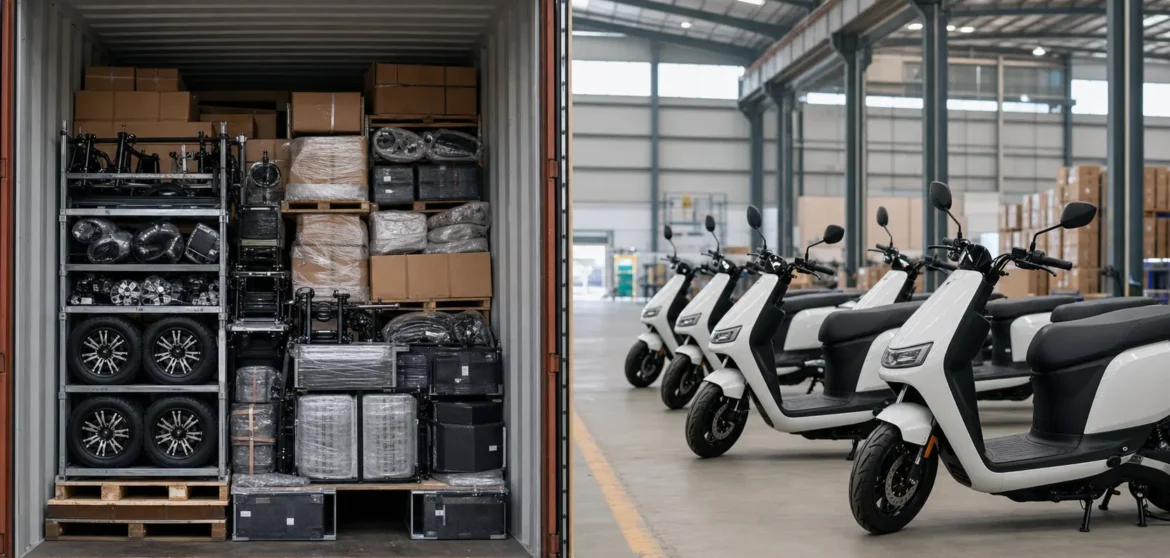
CBU, or Completely Built Up: the electric motorcycle is shipped as a complete vehicle. It is usually the fastest format for product display and early market testing, but it takes more container space and may be treated differently from parts or assembly kits by customs authorities.
SKD, or Semi Knocked Down: the vehicle is shipped partly disassembled. Typical items may include handlebar, wheel, battery, or exterior components depending on the model and destination requirements. It can improve packing density while keeping assembly work relatively simple.
CKD, or Completely Knocked Down: the electric motorcycle is shipped as a planned set of components for local assembly. This format requires more preparation, trained assembly steps, and importer-led approval, but it can support deeper local assembly programs where applicable.
Why CBU Imports Can Put Pressure on Margins
CBU electric motorcycles are convenient, especially for a new distributor validating a market. However, as order volume grows, the model can become less efficient. A completed vehicle occupies more space in a container, and the importer has less flexibility to organize local preparation, accessories, or private-label finishing.
In some Latin America markets, finished vehicles, parts, and assembly kits may be reviewed under different customs classifications or documentation requirements. The practical result is that buyers often need to compare CBU, SKD, and CKD routes before committing to a long-term import plan. No responsible supplier should promise a fixed tariff result without local verification required and customs broker verification.
For fleet buyers and delivery operators, the issue is broader than freight. They also need repeatable service parts, battery handling procedures, local technician training, and clear documentation support.
How CKD/SKD Planning Can Support Latin America Importers
CKD/SKD planning is not a shortcut around regulation. It is a structured supply-chain and assembly strategy. When planned carefully, it can help importers evaluate container utilization, local assembly readiness, and documentation preparation before products arrive.
Container planning: disassembled electric motorcycle components can often be packed more efficiently than finished vehicles, depending on model size, battery shipping rules, packaging method, and order mix.
Local assembly control: importers and local assembly partners can organize final assembly, inspection, and market-specific preparation closer to the sales region.
Documentation support: a supplier can provide packing lists, component references, assembly SOPs, and technical files for importer-led approval and customs broker review.
Brand and fleet flexibility: distributors can plan private-label details, parts stocking, and service workflows around the needs of local dealers or fleet customers.
What Buyers Should Verify Before Choosing CKD
A CKD program works best when the importer treats it as a real assembly project, not just a different packing method. Before placing an order, Latin America buyers should review customs classification, local assembly capability, battery and electrical handling, compliance pathway, and after-sales support.
Customs classification should be confirmed through customs broker verification. Compliance pathway, testing, registration, and approval steps should be handled through importer-led approval and local verification required in the destination market.
How SunRise EV Supports CKD/SKD Electric Motorcycle Programs
SunRise EV supports overseas partners with electric motorcycle CKD/SKD planning for importers, distributors, fleet buyers, and local assembly partners. The goal is to help buyers prepare a practical assembly workflow while keeping compliance decisions in the hands of the importer and local professionals.
Support can include model configuration, component grouping, packing discussion, assembly sequence review, SOP documentation, and technical documentation support for training local teams. Electric motorcycle specifications can also be discussed around terrain, delivery use, payload needs, battery range expectations, and service conditions.
Spanish documentation support can be prepared where applicable for Latin America partners. SunRise EV does not guarantee tariff treatment, customs clearance, certification approval, subsidies, or fixed savings. Those outcomes depend on local verification required, customs broker verification, and importer-led approval in the destination market.
A Practical Path From Sample Order to Local Assembly
For many buyers, the best path is phased. Start with a sample or pilot order to confirm model fit, then review whether SKD or CKD planning is appropriate for larger volume. Once the local team understands assembly steps and after-sales requirements, the importer can decide whether a deeper local assembly program makes commercial sense.
This staged approach helps reduce avoidable risk. It also gives distributors and fleet buyers time to validate product performance, spare parts demand, workshop readiness, and customer expectations before committing to a larger CKD supply plan.
Ready to Review a CKD/SKD Plan for Your Market?
If you are importing electric motorcycles into Latin America, CKD/SKD planning can be a useful conversation before your next container order. The right structure may help you compare freight efficiency, assembly readiness, documentation needs, and long-term dealer or fleet support.
Talk with SunRise EV about your target country, expected order volume, preferred electric motorcycle models, and local assembly resources. We can help prepare the technical and documentation support needed for your importer-led approval process, while your customs broker confirms the local requirements where applicable.